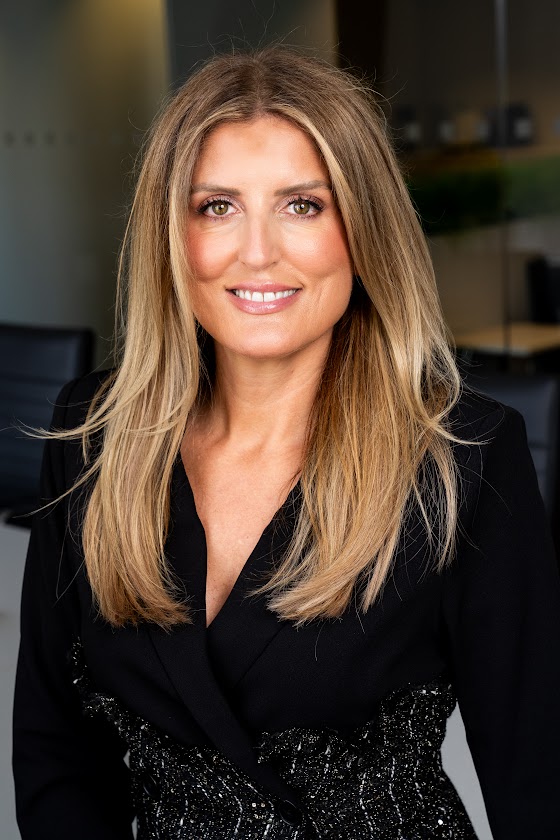
In this conversation, Chipo Muwowo speaks with Thea Jamison, Managing Director, CHANGE Global Investment. Thea explains why she likes blue-chip companies “that have multi-bagger upside”, where in Africa her firm is currently invested, and why the gap between perception and reality is Africa’s biggest investment challenge. She also shares one thing she’s optimistic about, and one thing she’s cautious of as she looks to the rest of 2025. Enjoy!
FULL INTERVIEW TRANSCRIPT
Chipo Muwowo: Great to see you, Thea. Thanks so much for joining me on the African Allocator Podcast.
Thea Jamison: Great to see you too, Chipo. And congratulations on your new African podcast. I’m so happy to be on it.
Chipo Muwowo: Yeah, that’s very kind. Thank you. Thank you so much. I’m just going to get straight to it. You’re the Managing Director of CHANGE Global Investment. You’re based in the US. Are you based in New York? Is that correct?
Thea Jamison: I’m based in New York.
Chipo Muwowo: Yeah, fantastic. Now, before we talk about the firm and your allocation strategies and things like that, I’m just curious to hear what got you into investing?
Thea Jamison: So, I was born and raised in Eastern Europe behind the Berlin Wall, had the privilege of watching the change and very early on decided that I wanted to be a part of developing those capital markets.
Chipo Muwowo: Where in Eastern Europe did you grow up?
Thea Jamison: I grew up in Bulgaria, Sofia. And I started working when the asset class was forming in the late 90s. I was still in college and my first job was to speak with governments in the developing world about the benefits of the capital markets and privatisation.
Chipo Muwowo: Fantastic. So, with CHANGE Global Investment, could you tell us a little bit about when it all started and why you focus on emerging and frontier markets specifically?
Thea Jamison: So I started a company in 2013. At that point, I had a number of years of experience in those markets and had a pretty good sense of what the opportunity is for investment. I’m clearly very, very passionate about the work. I find it incredibly rewarding to help build out those capital markets. And I’m surrounded with a very, very good team that’s really good at what we do. Our top four senior investment professionals have 20 years of average experience and we all understand those markets quite well and how to optimize the pricing and efficiencies.
Chipo Muwowo: Now, you know, you’re, as I said, you know, you cover emerging and frontier markets. I forgot to add public equities specifically. What’s the difference in your mind between emerging and frontier? I think it’s worth just, you know, clarifying that for our listeners.
Thea Jamison: Yes, absolutely. So historically, the emerging markets were countries that opened up their economies in the mid late ‘80s and subsequently opened the stock markets. So they were some of the first to enter the global investment opportunities set. Places like China, India, Brazil, Mexico, Poland in Eastern Europe. The frontier markets are the countries that entered the global investment opportunities that a little bit later, they opened their economies a good 10, 15 years later. They opened for foreign investment later. So examples would be Vietnam, the entire Middle East was probably the last region to join that investment opportunity. So today, however, the differences are not so much in the level of economic growth, but more so to do with accessibility. The emerging markets are very easily accessible for investors anywhere and frontier markets still have some accessibility challenges, which could also be opportunities, perhaps informational knowledge, there’s fewer analysts covering the stocks, they may be a little less liquid. And there could be still some custody arrangements that would be more peculiar to the frontier markets.
Chipo Muwowo: In some, you know, particularly Western investors’ minds, those challenges you mentioned are reasons to run away from frontier markets.
Thea Jamison: Of course.
Chipo Muwowo: Why are you going in?
Thea Jamison: Yeah, so clearly there’s an opportunity for returns that is stronger than that in the emerging markets. Emerging markets provide also different diversification benefits. Today, 70 to 80% of emerging market flows are through passive vehicles. And that makes them much more subject to global flows, global headlines. The frontier markets couldn’t be more different. They’re more distinct than emerging markets today than they’ve ever been. They’re mostly dominated by domestic investors and therefore, there’s more idiosyncratic factors and features which fit very well within a global asset allocation.
Chipo Muwowo: In a moment, we’re going to talk about specific countries and regions, even companies. But just zooming out a bit from CHANGE Global Investment’s perspective, what’s shaping your asset allocation strategy? What key principles are you, you know, investing by?
Thea Jamison: Yes, so our asset allocation framework is the result of many, many years of experience in those markets. And what we have learned is that it’s very important to diversify globally, but concentrate by stock. And the reason why we diversify globally is because we can look for hidden gems anywhere across any region, regardless of what our peers are doing. But just as importantly, we’re able to diversify macro, unforeseen political risk. And we concentrate by stock to provide this ability for upside potential while limiting the downside. So the end result is a portfolio that historically has been driving returns through alpha generation while minimising beta as well as volatility.
Chipo Muwowo: And you talk about being global, what regions of the world are you invested in at the moment? And, you know, maybe give us a sense of the kind of sectors that you like and favour over others.
Thea Jamison: Yes, absolutely. So by globally, we mean allocating a meaningful exposure to all four regions. Today, we have roughly 30% in Asia, about 30% in South America, 20% allocated to Africa and the Middle East, and another roughly 20% in Eastern Europe. In terms of sector allocation, our sector allocation is very representative of the opportunity set with some differentiating points. We think of the portfolio as being allocated to three main buckets. We have the consumption bucket, which is quite characteristic for emerging in frontier markets and that investment case is well articulated by the industry. The second bucket would be the financial services bucket. And that is quite differentiated for us. Historically, financials tended to be the banks, the big banks in the universe. For us, financial services is, means a focus on the capital market development. So we’re specifically looking out companies that have exposure to the growth in the domestic markets. Examples would be stock exchanges, asset managers, brokers. So any type of an enterprise that’s levered the growth in the domestic markets. And then lastly, the third bucket will be opportunistic where we have technology, healthcare, utilities, some commodity exposure, so truly diversified across all sectors.
Chipo Muwowo: Would that diversification be representative in your African allocation as well? Or are there particular sectors in Africa that you favor over others?
Thea Jamison: Yes, absolutely. So we do have diversified exposure across Africa. We’re invested in close to 10 countries today in Africa, so in some of the bigger as well as some of the smaller countries in sub-Saharan Africa as well as North Africa. I do have a bias for the companies that are directly leveraged to the growth in those domestic markets. So examples would be Stanbic in Nigeria. It’s by far the largest wealth and asset manager in Nigeria. It has over 40% market share. It’s incredibly dominant in the custody market with well over 70% market share. So that would be definitely the bias for us.
Chipo Muwowo: What do you look for in companies? So you mentioned Stanbic there and its, you know, dominance in the Nigerian market. Can you mention maybe two or three things that are absolutely key from your perspective when you’re researching companies and getting to know them and their management teams better.
Thea Jamison: Yes, so our investment philosophy is actually quite straightforward. We’re looking for blue chip companies that have multi-bagger upside. And what we mean by a blue chip company is a company that’s market dominant in its space. The reason why we like that is because in the developing world, market dominance comes with excess profits and those excess profits are a terrific way to invest or grow, as well as minimise the downside. These companies do not need leverage. They’re consistently investing internal cash flow and they’re paying out pretty good dividend yields this [inaudible]. The differentiating point between us and others that look for blue chip companies is the timing. We’re very adamant that we invest only when the upside is one of a multi-bagger opportunity.
Chipo Muwowo: What are some of your red lines? So, things that will make you run a mile from a company?
Thea Jamison: Well, clearly anything that has an operational risk associated with perhaps a new news related to a legal liability or management issues. Those tend to be quite rare from our experience. We’ve only really had two or three such examples. Typically, we sell a company when it reaches full its full price potential. We look at valuations relative to historical multiples. Relative to sector averages, but also relative to the portfolio. Today, the portfolio is trading at eight times trailing PE with a 6% dividend yield. So these are very unprecedented valuations. It’s hard to sell stocks. And we also have a lot to pick from. So our job is, the hardest part about the job today is to ensure that we’re sufficiently concentrating the portfolio when there are so many opportunities across the board.
Chipo Muwowo: So just going back to your point about stock picking, would you describe your approach as that of a value investor? Would you describe CHANGE as a value investor or not quite?
Thea Jamison: I would describe us as a very picky investor. Clearly, we’re investing in those markets for growth, but we also want significant upside. We’re not traders. We don’t get involved when the upside is 15, 20%. We get involved when we see a 4 or 5x multiple upside. And so the end result is a portfolio that has pretty strong growth profile. Right now we’re anticipating close to 25% earnings growth for the average weighted portfolio company. And we are doing that with very attractive upside. I mentioned the 8% trailing or eight times trailing PE which getting as close to historical averages, including dividend yield and earnings growth, adding up all those three sources of returns. It takes us in the mid-teens annualised 10-year projected returns.
Chipo Muwowo: Which countries in Africa are you invested in? I think you mentioned you’re invested in 10 countries. Can you give us a sense of what those are?
Thea Jamison: Yeah, so we’re heavily invested today in Nigeria, Tanzania, Kenya, Morocco. We have some exposure in West Africa. We also have some exposure in the smaller countries in East Africa, such as Uganda. And I’m headed to Ethiopia in several weeks, where we’re hopeful to work with the newly opened Ethiopian Stock Exchange to help build out the custody arrangements that would ultimately allow foreign investors like ourselves to participate in the domestic market growth.
Chipo Muwowo: That’s fantastic. Now one of the big challenges of investing in Africa, one of the most well-known is, so investing as an international investor, I should say, is just FX risk. I’m curious to hear how you approach it, you know, what’s your attitude to it? How do you manage that?
Thea Jamison: So, historically, FX risk was very effectively managed by diversifying country exposure. And that was because at times one FX would work, appreciate, others may depreciate. And ultimately, within a diversified, globally diversified portfolio, the FX risk was not a significant driver of returns. Clearly, everything has been flipped upside down in the past 10, 15 years. We’ve seen a global dollar strong event, which affected negatively all currencies across the world, not just in developed, but also developing frontier African markets. And so global diversification by country has not been as effective. And that is why we adjusted our portfolio construction and thinking by demanding more in terms of prospective returns from our investments. When I first started out, I was looking for stocks that can double in five to seven years. We adjusted that target to stocks that can have that 4 or 5x within that time period. And so what that means for our stock selection, again, looking at the three sources of returns, on the earnings side, we’re looking for companies that have a stronger growth profile. On the dividend side, we’re looking for companies that are ramping up dividends or share repurchases, which has been the case recently. And lastly, on the multiple side, we’re looking for companies that are trading at a bigger discount to their historical averages to ride out a stronger re-rating upside.
Chipo Muwowo: Have you ever had an experience where, you know, when a company has hit that multiple, when you’re looking to exit an investment? It’s been tricky because of, you know, maybe saying dollar shortages or that kind of thing. What was, have you had any difficult experiences around exiting investments and currency?
Thea Jamison: We’ve never been forced sellers. We have been very fortunate to have investors that are long-term oriented, that truly understand what we do and what the opportunity set is. That said, I do want to emphasise that those lockups are extreme situations in the developing world. Sometimes we tend to focus on those as if that is the norm. Lockups do happen. They tend to free up. And to ensure that one can ride it out, one needs to be very thoughtful and selective about the type of investors that come into those markets.
Chipo Muwowo: Now, from your perspective as a US fund manager, what opportunities and challenges are peculiar to investing in Africa?
Thea Jamison: Yeah, so I would say that the most peculiar challenge about investing in Africa is that dramatic gap between perception and reality. It’s a challenge because we have to work so much harder to educate investors, especially in this country, in the US, less than half of the population has passports. So traveling abroad is not the norm and certainly not to Africa. It takes a lot more legwork to educate. What we have found is that taking investors to the region on the ground tends to be transformational. They become believers. And on the contrary, the reason why that’s also an opportunity is because this gap between perception and reality creates pricing inefficiencies. I like to say that in my work, I arbitrage one with the other, and I find it very professionally as well as personally rewarding.
Chipo Muwowo: Well, that’s one of the goals of this podcast, you know, to educate global audience about the African opportunity set. So yeah, we’re playing a part as well in that. Thea, just a final question. Q1 is nearly over. Q1 of 2025. As you look to the rest of the year, as you look at African markets for the rest of 2025, what are some reasons for optimism and some reasons for caution?
Thea Jamison: Yes, time has gone by very quickly. I can’t believe it’s almost March. So I am quite optimistic about the African markets. They are beyond inflection point. The markets are re-rating, liquidity is improving dramatically, and this is all happening on domestic investment flows. So I’m super optimistic that if we do see some foreign flows return, we will see very, very attractive returns. On the latter part of your question about possible concern well with Africa, as well as any developing country and market, one has to be always watchful about signs of regression. We’re investing in those markets for change, for transformation, for the notion that they continue on the reform path, that they continue opening up to foreign investment, domestic investment, and any sign that that may not be the case or that they’re taking a dramatic step back would be a concern to us.
Chipo Muwowo: Fantastic. Thea, thank you so much for a really interesting conversation. I appreciate you joining me today. Thank you.
Thea Jamison: Thank you, Chipo. Best of luck. I’m excited for you.
Chipo Muwowo: Thank you.
Thea Jamison: Take care.
© African Allocator, 2025
Founded by journalist Chipo Muwowo, the African Allocator Podcast exists to tell the stories of serious investors who are allocating real dollars across the continent. These leaders, with ‘skin in the game,’ represent the worlds of institutional investment (i.e. pension funds, sovereign wealth funds, family offices), asset management (i.e. public equity, private equity, venture capital, and other alternatives), and business operations (i.e. CEOs and CFOs running diverse African businesses). Subscribe today!
 African Allocator Podcast